
When homeowners compare power washing vs. pressure washing, the terms often sound interchangeable. In reality, the difference comes down to one important factor: heat. That single distinction affects how surfaces are cleaned, what methods are safe, and which approach delivers the best long-term results for your home.
Understanding how each method works and where soft washing fits in helps you avoid surface damage, wasted effort, and incomplete cleaning.
How High-Pressure Cleaning Actually Works
Both power washing and pressure washing rely on pressurized water to remove buildup from exterior surfaces. The force of the water breaks down layers of dirt, algae, mold, and residue that standard cleaning methods can’t handle.
This process is widely used across residential properties because it restores surfaces quickly and improves how a home looks and performs over time.
A professional exterior cleaning company approaches this differently than a typical homeowner. Using the wrong technique can strip paint, damage wood, or force water into areas where it shouldn’t go.
What Is Pressure Washing?
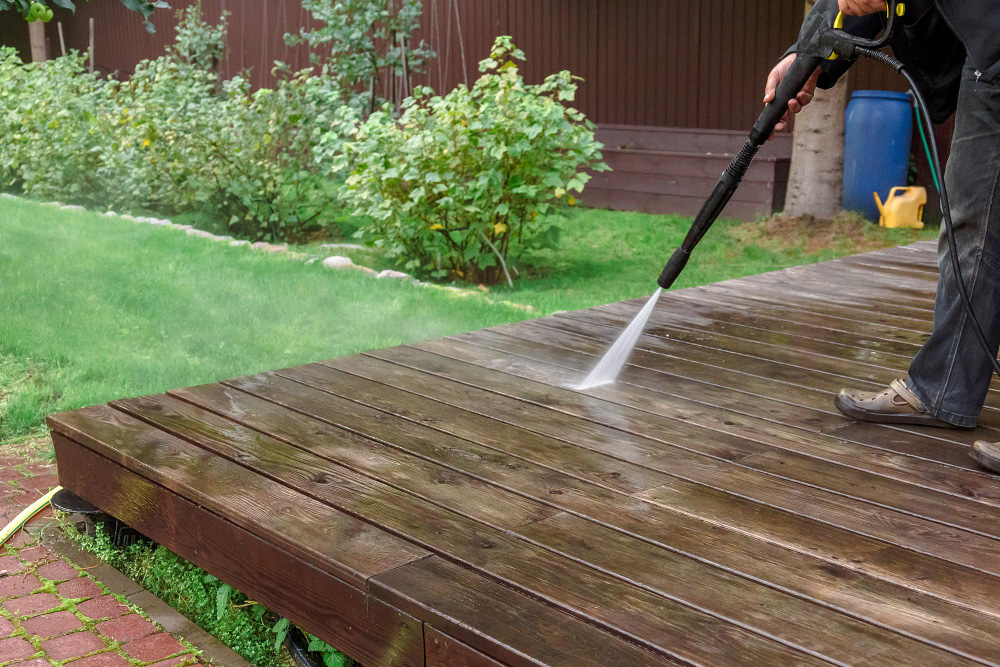
Pressure washing uses high-pressure water at standard temperature to clean surfaces. It’s effective for removing surface-level dirt, dust, and light organic buildup.
This method is commonly used for:
- Deck washing
- Walkway washing
- Fence washing
- Driveways and patios
Because it does not use heat, pressure washing is generally safer for a wider range of surfaces when handled correctly. It’s often the preferred choice for routine maintenance where buildup hasn’t become deeply embedded.
However, pressure alone doesn’t always solve deeper issues like grease, mildew staining, or long-term neglect.
What Is Power Washing?
Power washing operates similarly but introduces heated water into the process. That added heat changes how effectively surfaces can be cleaned.
Hot water helps:
- Break down grease and oil
- Loosen stubborn grime
- Kill organic growth like mold and mildew
This makes power washing more effective for heavily soiled surfaces, especially hard materials like concrete. It’s commonly used for areas that haven’t been cleaned in a long time or have built-up residue that cold water struggles to remove.
The trade-off is that heat, combined with pressure, increases the risk of surface damage if used incorrectly.
The Core Difference That Matters
The distinction between power washing and pressure washing isn’t about pressure levels; it’s about temperature.
Pressure washing relies on force.
Power washing combines force with heat.
That difference determines:
- How deeply surfaces are cleaned
- What types of buildup can be removed
- Which materials can safely handle the process
Choosing between the two isn’t about preference. It’s about understanding the condition of the surface and the type of contamination involved.
Where Soft Washing Fits In
Many homeowners overlook a third method: house soft washing. This is often the most appropriate option for delicate exterior surfaces.
Soft washing uses:
- Low-pressure water
- Specialized cleaning solutions
Instead of blasting away dirt, it treats and removes organic growth at the source. This is especially important for:
- Siding
- Roof shingles
- Painted surfaces
In practice, most homes require a combination of methods. Knowing when to use each one is what separates a surface-level clean from a complete exterior system approach.
Choosing the Right Method for Each Area
Different parts of a home require different cleaning strategies.
Hard surfaces like concrete driveways can handle power washing when needed. Wooden decks and fences often respond better to controlled pressure washing. Siding and roofing typically require soft washing to prevent damage.
This is where many DIY attempts fall short. It is important to understand how materials respond under pressure, heat, and chemical treatment.
For homeowners considering pressure washing in Underhill, VT, seasonal factors also play a role. Moisture, temperature changes, and organic buildup from surrounding trees all influence which method works best.
Why Method Selection Impacts Long-Term Results
Using the wrong cleaning approach doesn’t just risk immediate damage. It can create long-term issues that aren’t obvious right away.
Too much pressure can:
- Strip protective coatings
- Force water into siding or cracks
- Weaken wood fibers
Using heat where it’s not needed can:
- Warp materials
- Accelerate wear
- Reduce surface lifespan
On the other hand, using insufficient cleaning methods can leave behind contaminants that continue to grow and spread.
Every surface requires a different approach, and getting that wrong often leads to repeat cleaning or costly repairs.
How Exterior Cleaning Connects to Overall Home Maintenance
Exterior cleaning isn’t isolated. It directly affects how other parts of your home perform.
For example:
- Dirty siding can trap moisture
- Roof buildup can reduce drainage efficiency
- Walkways with algae become safety hazards
A complete approach often includes services like:
- Gutter cleaning to maintain water flow
- Roof cleaning to prevent buildup damage
- Window cleaning for visibility and finish
- Solar panel cleaning to maintain efficiency
Indoor air quality also ties into maintenance. Services like air duct cleaning, dryer vent cleaning, and mini-split cleaning help reduce buildup that affects airflow and system performance.
When handled together, these services support both the structure and the environment inside the home.
Why Professional Cleaning Delivers Better Outcomes
The difference between an average result and a lasting one usually comes down to method selection and execution.
A trained team understands:
- Surface limitations
- Correct pressure levels
- When to use heat or avoid it
- Where soft washing is required
This level of detail prevents damage while improving results.
Working with the highest-rated exterior cleaning company in Vermont also means you’re getting a process that has been refined over time. Consistency, communication, and proper equipment all play a role in delivering reliable outcomes.
A Smarter Approach to Keeping Your Home Clean
Exterior cleaning works best when it’s treated as part of an ongoing maintenance plan rather than a one-time fix.
Regular service helps:
- Prevent buildup from becoming severe
- Extend the life of surfaces
- Maintain property value
It also reduces the need for more aggressive cleaning methods later on.
Choosing between power washing vs. pressure washing isn’t just a technical decision. It’s about understanding how to care for your home in a way that protects it over time.
Built Around What Your Home Actually Needs
Every home is different, and so is every cleaning requirement. At Mansfield Services, we approach each project by choosing the right method, whether that’s soft washing for siding, pressure washing for decks and walkways, or power washing where buildup demands it.
As a fully insured, family-owned team, we make the process simple with quick response times and clear communication from start to finish.
If you’re unsure what your home needs, reach out today for a fast, honest assessment and get scheduled without the hassle.
