
Short answer: A dryer vent through the roof can work, but it’s the hardest kind to keep working. Lint collects in the roof cap, the damper can stick open, and in a Vermont winter the warm exhaust melts snow that can refreeze at the roof edge and add to ice dams. If your dryer vents through the roof, have the whole run cleaned once a year. If it keeps clogging, rerouting it to a sidewall is often the long-term fix.
Why some dryers vent through the roof
Most dryers vent straight out the nearest exterior wall. When the laundry is on a second floor, in a closet in the middle of the house, or anywhere without an outside wall close by, builders often run the duct up through the attic and out the roof instead. It’s a shorter path on paper, but it puts the end of the vent where nobody can see it or reach it.
What goes wrong with roof dryer vents
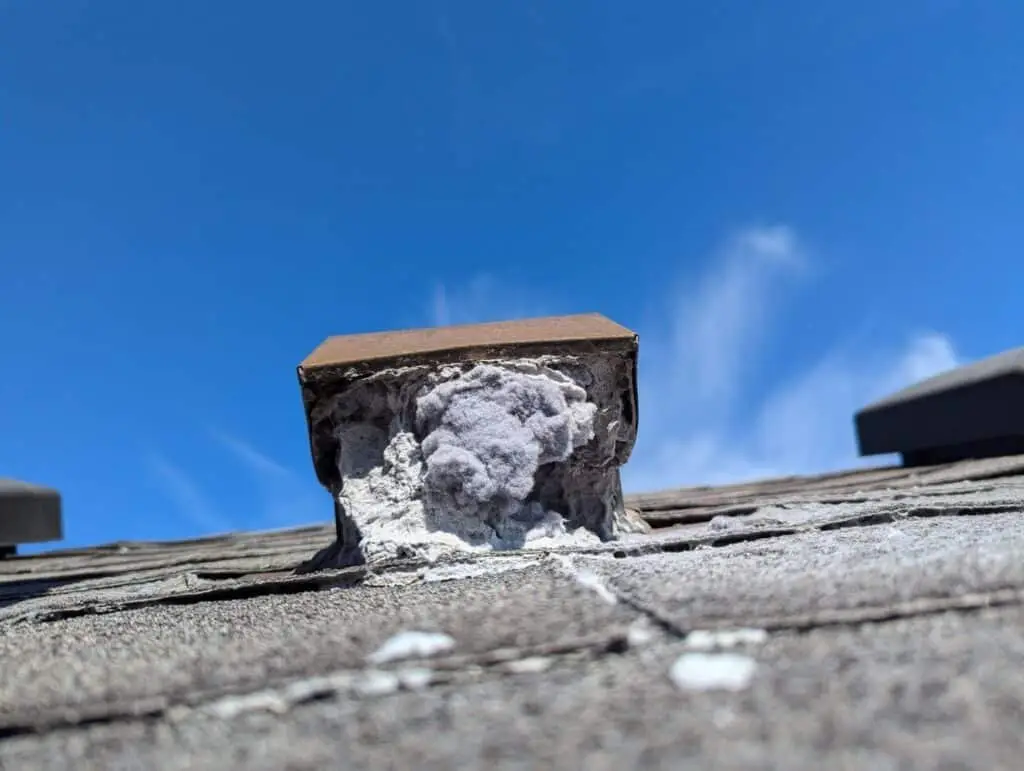
- Lint builds up at the cap. Over time the roof terminal collects lint and gets clogged, which slows the airflow and makes the dryer work harder.
- The damper sticks open. Once the cap is coated with lint, the flap can stay open, letting cold air and moisture back in.
- It’s hard to clean. A wall vent can be cleaned from the ground. A roof vent means getting on the roof, which most homeowners shouldn’t do and many skip, especially in winter.
- Screens and bird guards clog fast. Some roof caps come with a screen. The International Residential Code doesn’t allow screens on dryer exhaust exits, because they catch lint and block the airflow.
- Cold attics. A duct running through an unheated attic carries warm, wet air past cold surfaces, which can cause condensation inside the duct and make lint stick.
Roof dryer vents and ice dams
Dryer exhaust is warm and damp. When it blows out through a snowy roof, it melts the snow around the vent. That meltwater runs down the roof and can refreeze at the colder edge, and if it happens often enough it adds to an ice dam big enough to push water under the shingles. Home inspector Reuben Saltzman calls roof-vented dryers “a major contributor to ice dams” for exactly this reason.
In a place with Vermont’s winters, that’s a real cost on top of the dryer running slower.
Signs your roof dryer vent is clogged
- Clothes take longer to dry, or need a second cycle.
- The dryer or the laundry room gets noticeably hot.
- You can see lint around the roof cap from the ground, or the flap looks stuck open.
- A musty or burning smell when the dryer runs.
- Melted spots or icicles around the vent area in winter.
Your options if you have a roof dryer vent
1. Keep it clean
Have the entire run cleaned, from the back of the dryer all the way to the roof cap, at least once a year. Clearing only the lint trap or the first few feet behind the dryer misses where roof vents usually clog.
2. Fix the cap
If the roof cap has a screen or a damper that’s stuck, it can be replaced with a dryer-rated roof terminal that has a working backdraft damper and no screen.
3. Reroute to a sidewall
Moving the vent to an exterior wall, ideally one you can reach from the ground, is often the long-term fix. Whether it works depends on the layout: the new route still has to stay within the 35-foot limit, counting every elbow, unless the dryer manufacturer allows more. Our dryer vent replacement guide covers what a reroute involves and what it typically costs.
How often should a roof dryer vent be cleaned?
Once a year is the minimum for a roof vent. Large households, heavy dryer use, or a long run with several elbows can call for cleanings more often.
Have a roof-vented dryer?
We’ve cleaned more than 1,100 dryer vents across northern Vermont. We clean the whole line, camera-inspected end to end, across Chittenden, Lamoille and Franklin counties. Call or text (802) 777-3210.
Book now → Dryer vent replacement →Related guides
- How often should you clean your dryer vent?
- Signs your dryer vent is clogged
- Why is the “Check Vent” light on?
- Cleaning your dryer vent yourself vs. hiring a pro
- Dryer vent smells, birds and animals
- How much dryer vent cleaning costs
- Dryer vent replacement