
Short answer: A musty or dirty-sock smell usually comes from mold and bacteria growing on the damp coil and blower wheel inside the head, and a deep cleaning clears it. A vinegar, sharp or burning smell is different: it can mean an electrical part is overheating, so turn the unit off and call an HVAC technician.
What each smell usually means
| Smell | Usual cause | What to do |
|---|---|---|
| Musty, moldy or mildew | Mold on the coil, blower wheel or drain pan | Book a deep clean |
| Dirty socks or sour | Bacteria on the coil, often when the heat switches on | Book a deep clean |
| Dusty, the first time it runs | Dust burning off after sitting unused | Usually fades; clean if it keeps coming back |
| Vinegar, sharp or burning | An overheating electrical part | Turn it off and call an HVAC technician |
| Rotten or dead animal | A rodent or insect in or near the unit or line set | Turn it off and have it checked |
Why mini splits get musty
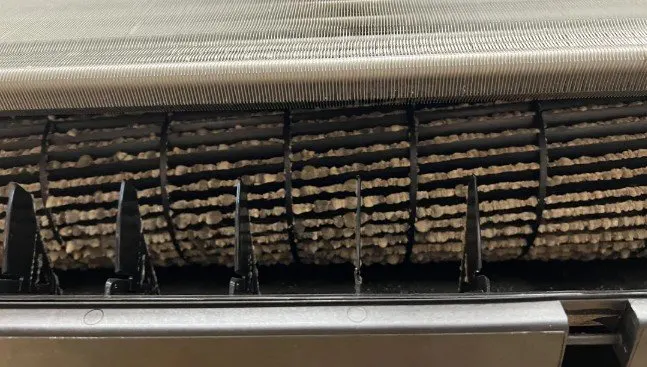
When a mini split cools, the coil gets cold and wet as it pulls moisture out of the air. The head is dark, damp and full of dust that slips past the thin filters, which is a good place for mold and bacteria to grow. The blower wheel sits right after the coil and collects the most buildup. Each time the fan starts, it blows that smell into the room. Rinsing the filters doesn’t reach any of it.
Why the smell is often worse when the heat comes on
Many people notice a dirty-sock smell when they switch a head from cooling to heating in the fall. Growth that built up on the coil over a humid Vermont summer warms up and gives off more odor. A cleaning before the heating season helps.
Can you get rid of a mini split smell yourself?
Rinsing the filters and wiping the vanes may help a little, but the smell lives on the coil and blower wheel. Sprays sold for mini splits can mask it for a while, and bleach or vinegar can damage the unit. The lasting fix is taking the head apart and cleaning the coil, wheel and pan. See cleaning a mini split yourself vs. hiring a pro.
How we clear the smell
We open up each head and clean the coil, blower wheel, filters and housing with coil detergent and a rinse setup that catches the runoff, so the buildup behind the smell comes out. With us, the first indoor head is $289, and the price per head goes down the more heads we clean in one visit.
Frequently asked questions
Why does my mini split smell like dirty socks?
Usually bacteria and mold growing on the damp coil and blower wheel. It’s often worst when the heat first comes on in the fall. A deep cleaning clears it.
Why does my mini split smell musty?
Mold and mildew grow inside the dark, damp head, mostly on the coil and blower wheel. Running the unit blows the smell into the room.
Why does my mini split smell like vinegar?
A vinegar or sharp smell can mean an electrical part is overheating. Turn the unit off and call an HVAC technician.
Is a mini split smell dangerous?
A musty smell means something is growing in the unit, and some people are sensitive to mold. A burning, vinegar or sharp smell can be an electrical problem, so shut it off.
Related guides
- How often to clean a mini split
- Signs your mini split needs cleaning
- Mold in your mini split
- Cleaning a mini split yourself vs. hiring a pro
- How much mini split cleaning costs in Vermont
- Dryer vent cleaning
Sources
- Trane: Why does my mini split smell?
- Energy Vanguard: Ductless mini splits can get nasty inside
- Efficiency Vermont: How to clean and maintain your ductless heat pump system
Get rid of the smell at the source
Mansfield Services cleans mini splits across Chittenden, Lamoille and Franklin counties. Book online in a couple of minutes, or call or text (802) 777-3210.
Book mini split cleaning → See mini split cleaning →